
music theory for guitar pdf
Unlock guitar’s potential! Explore Ry Naylor’s free PDF song sheets, alongside Reddit’s guitar neck maps—visual aids for mastering keys and scales effectively․
Why Learn Music Theory?
Delving into music theory empowers guitarists beyond rote learning․ Understanding the ‘why’ behind music unlocks creativity, improvisation skills, and songwriting potential․ Resources like free PDF song sheets from Ry Naylor, coupled with guitar neck maps found on Reddit’s r/guitarlessons, provide a practical foundation․
These resources aren’t just about notes; they’re about visualizing relationships between chords, scales, and keys on the fretboard․ This knowledge allows you to navigate the instrument with confidence, understand chord progressions, and even deconstruct your favorite songs․
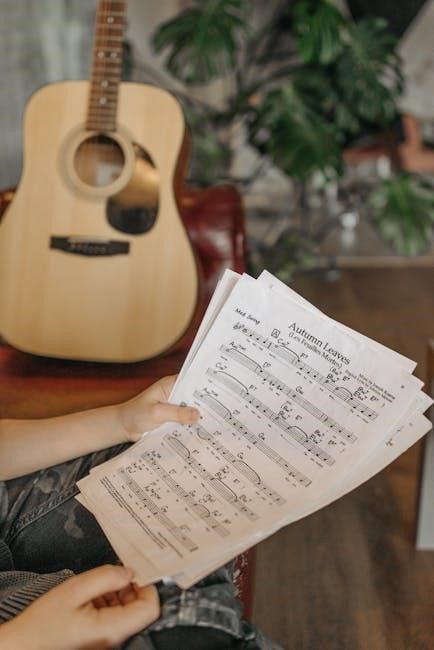
Ultimately, music theory transforms you from simply playing the guitar to truly understanding the music you create and perform, fostering a deeper connection with your instrument․
Benefits for Guitarists
Guitarists benefit immensely from music theory, moving beyond tab reliance towards genuine musical comprehension․ Utilizing resources like Ry Naylor’s free PDF song sheets and the guitar neck maps shared on Reddit’s r/guitarlessons accelerates learning․ These tools visualize key relationships and scale patterns directly on the fretboard․
This understanding unlocks the ability to improvise confidently, craft original chord progressions, and analyze existing songs with greater depth․ You’ll grasp why certain chords sound good together and how to build upon them․
Furthermore, theory aids in communication with other musicians, streamlining rehearsals and collaborative songwriting․ It’s a pathway to musical fluency and expressive playing․

Fundamentals of Music Theory
Grasp the staff, clef, notes, and rhythm—building blocks for musical literacy․ PDF resources offer visual guides to these core concepts for guitarists․
Understanding the Staff and Clef
The musical staff, comprised of five lines and four spaces, forms the foundation for notating pitch․ Learning to read this visual representation is crucial․ The clef, placed at the beginning of the staff, assigns specific pitches to each line and space – typically the treble clef for higher-pitched instruments like guitar․
PDF resources, like those shared on Reddit and by Ry Naylor, often visually demonstrate the staff and clef in relation to the guitar neck․ Understanding where notes reside on the staff directly correlates to fret positions on the guitar․ This connection is vital for translating written music into playable forms․ Mastering this foundational element unlocks the ability to decipher and interpret musical scores, enhancing your overall musicianship and theoretical comprehension․
Notes, Rests, and Rhythm
Notes represent the duration of sound, while rests indicate silence․ Understanding their values – whole, half, quarter, eighth, and sixteenth – is fundamental to reading and playing music accurately․ Rhythm dictates when notes are played, creating the pulse and groove of a song․
PDF resources, including Ry Naylor’s song sheets, often visually represent rhythmic patterns alongside notation․ These materials can help guitarists internalize how notes and rests translate to strumming or picking patterns․ The Reddit-shared guitar neck maps, while focused on pitch, indirectly support rhythmic understanding by providing a visual framework for timing changes․ Accurate rhythm is paramount; mastering these concepts unlocks confident and expressive guitar playing․
Key Signatures and Scales
Key signatures reveal sharps or flats, indicating the scale’s tonal center․ Scales are ordered sequences of notes forming the melodic foundation of music․ The circle of fifths, often visualized in guitar neck maps (as found on Reddit), illustrates key relationships․
PDF resources, like those from Ry Naylor, frequently demonstrate scales within specific keys․ Understanding that natural minor scales share notes with their relative major counterparts—a point highlighted in the Reddit discussion—simplifies learning․ These PDFs provide visual aids for guitarists to map scales across the fretboard․ Mastering key signatures and scales unlocks improvisation and composition skills, allowing for fluid and informed musical expression․

Guitar-Specific Music Theory
Visualize keys using guitar neck maps from Reddit, and explore Ry Naylor’s PDFs for fretboard note locations—essential for applying theory directly to your playing․
Guitar Neck Notes and Maps
Mastering the fretboard is crucial, and resources like those found on Reddit offer invaluable guitar neck notes maps․ These visual aids, often organized following the circle of fifths, dramatically simplify understanding key relationships․
PDFs detailing these maps are readily available, providing a comprehensive overview of note locations across all strings․ This isn’t just rote memorization; it’s about internalizing the musical landscape of your instrument․
Ry Naylor’s materials complement this approach, offering song sheets that reinforce these concepts in a practical context․ Knowing where notes lie allows for improvisation, chord construction, and a deeper comprehension of scales․ Utilizing these resources together accelerates learning and unlocks a more intuitive playing experience․
Visualizing Keys on the Guitar
Understanding how keys translate to the guitar fretboard is paramount․ Resources like the guitar neck maps, frequently shared on platforms like Reddit, provide a visual framework for this․ These maps, often structured around the circle of fifths, reveal patterns and relationships between keys․
PDF resources showcasing these maps allow guitarists to quickly identify notes and chords within a given key․ This visual approach bypasses abstract theory, making key signatures more tangible․
Combined with materials from sources like Ry Naylor, which offer practical song sheets, visualizing keys becomes a dynamic process․ You’ll begin to see how scales and chords interconnect, fostering improvisation and a deeper musical understanding․ This empowers you to navigate the fretboard with confidence and creativity․
Natural Minor Scales and Relative Major
Exploring the connection between natural minor scales and their relative major counterparts unlocks a powerful compositional tool․ The shared notes, differing only in root, offer versatile harmonic possibilities․ PDF resources, like those found through Ry Naylor’s song sheets and Reddit’s guitar learning community, often demonstrate this relationship․
Guitar neck maps, visualizing keys, become even more valuable when understanding relative minors․ You can utilize the same fretboard patterns for both scales, simply shifting the tonal center․
This concept simplifies learning and improvisation․ By mastering one scale, you inherently gain access to another, expanding your harmonic palette․ These PDF aids provide a clear visual representation, solidifying the connection between minor and major tonalities on the guitar․

Chords and Harmony
Discover chord construction with triads, progressing to 9th chords—simplified through online resources․ Explore chord voicings and progressions using available PDF guides․
Triads and Chord Construction
Understanding the building blocks of harmony begins with triads – three-note chords forming the foundation of most music․ These are constructed by stacking intervals of thirds․ Major triads create a bright, happy sound, while minor triads evoke a more melancholic feel․ Diminished and augmented triads offer further harmonic color․
Resources like online guitar courses and PDF guides, such as those found through Reddit’s r/guitarlessons, often detail numerous triad shapes across the guitar’s fretboard․ Notably, a source mentions “Triads on Every String Set 420 shapes total?” demonstrating the extensive possibilities․ Learning these shapes allows for quick access to various chord voicings․
Mastering triad construction is crucial for improvising, composing, and understanding how chords function within a song․ PDF resources can visually map these shapes, aiding in memorization and application․ This foundational knowledge unlocks more complex chord structures like 7ths and 9ths․
Chord Progressions
Chord progressions are the heart of songwriting, creating emotional movement and harmonic interest․ Common progressions, like I-IV-V, provide a familiar and satisfying structure․ Understanding how chords relate to each other within a key is essential for crafting compelling music․
PDF resources and online guitar courses often demonstrate popular progressions and their variations․ Analyzing songs using chord charts, readily available online, reveals how professional musicians utilize these patterns․ The circle of fifths, frequently visualized in guitar neck maps (as found on Reddit’s r/guitarlessons), aids in understanding key relationships․
Experimenting with different chord voicings and inversions adds depth and nuance to progressions․ Learning to substitute chords while maintaining harmonic function expands creative possibilities․ Resources from Ry Naylor’s song sheets can provide practical examples of progressions in real songs․
9th Chords and Chord Voicings
Expanding beyond basic triads, 9th chords add color and sophistication to your guitar playing․ These chords incorporate a 9th interval, creating a richer harmonic texture․ Mastering different voicings – the specific arrangement of notes within a chord – is crucial for achieving desired sounds․
PDF resources and online courses often demonstrate various 9th chord shapes and their applications․ Websites like Ultimate-Guitar․com offer extensive chord diagrams․ Simplified 9th chord charts, as noted in recent guitar forum discussions, can make learning easier․
Experimenting with different voicings allows you to create unique textures and transitions․ Understanding how to move between voicings smoothly enhances your musicality․ Resources like Ry Naylor’s transcriptions can reveal how professional guitarists utilize 9th chords in their playing․

Scales and Modes
Discover major, minor, and pentatonic scales via PDF resources! Explore modes and their applications, utilizing guitar neck maps for visual learning and mastery․
Major and Minor Scales
Understanding major and minor scales is foundational to guitar-based music theory․ Fortunately, numerous PDF resources simplify this learning process․ Ry Naylor’s free song sheets often demonstrate scale applications within actual songs, providing practical context․ Reddit’s r/guitarlessons community highlights PDF neck maps that visually represent scale patterns across the fretboard․
These maps are invaluable for internalizing scale shapes and understanding how they relate to different keys․ Crucially, remember the connection between major and minor scales: natural minor scales share the same notes as their relative major, differing only in the root note․ Therefore, resources focused on major scales can also be applied to understanding minor scales, expanding your musical vocabulary efficiently․ Visualizing these scales on the guitar neck, using provided PDFs, accelerates comprehension and improvisation skills․
Pentatonic Scales
Pentatonic scales are essential for guitarists, offering a simplified yet versatile approach to soloing and improvisation․ Many free PDF resources, like those shared on Reddit’s r/guitarlessons, showcase pentatonic scale patterns across the fretboard․ These diagrams, often included within broader guitar neck maps, visually demonstrate how to navigate these scales in various keys․
Ry Naylor’s song sheets frequently incorporate pentatonic scales within transcribed solos, allowing you to analyze their practical application․ Mastering pentatonic scales provides a strong foundation for blues, rock, and many other genres․ The visual aids in these PDFs help you connect scale shapes to musical contexts, fostering a deeper understanding beyond rote memorization․ Utilizing these resources accelerates your ability to confidently create melodic lines on the guitar․
Modes and Their Applications
Exploring musical modes expands your harmonic palette beyond major and minor scales․ While PDFs directly focusing on modes are less common, understanding their relationship to scales – as presented in resources like those found on Reddit’s r/guitarlessons – is crucial․ These resources often illustrate how modes are derived from parent scales․

Ry Naylor’s song sheets, though not explicitly mode-focused, demonstrate modal playing through transcribed solos․ Analyzing these transcriptions reveals how guitarists utilize different modes to create specific moods and textures․ Learning to visualize modes on the guitar neck, using fretboard maps, unlocks new improvisational possibilities․ Applying modal concepts adds depth and sophistication to your playing, moving beyond conventional harmonic structures․

Resources and Learning Materials
Discover free PDFs from Ry Naylor, explore online guitar courses for structured learning, and benefit from beginner lesson series to enhance your skills․
Free PDF Song Sheets (Ry Naylor)
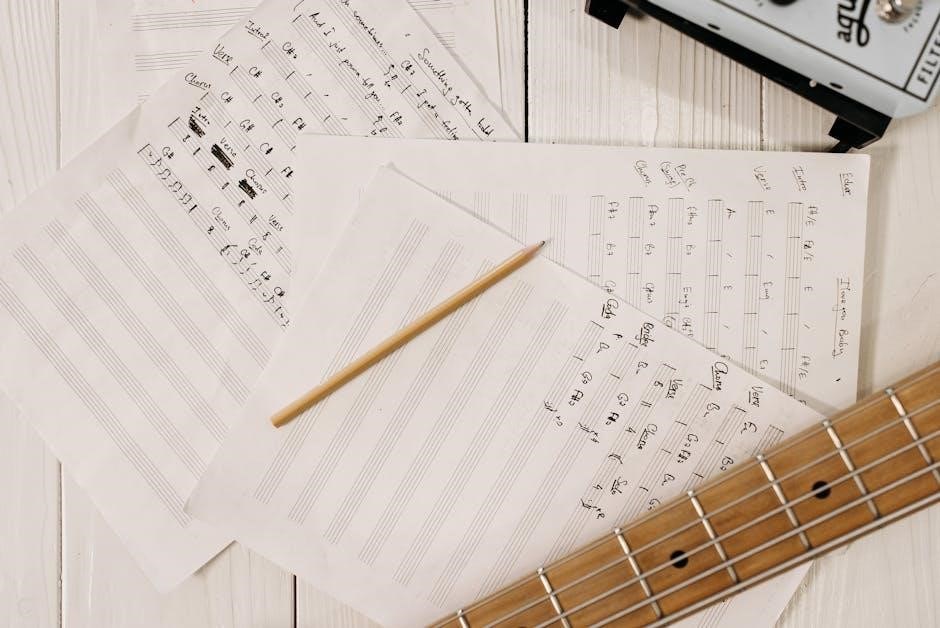
Ry Naylor provides a valuable resource for guitarists seeking to deepen their understanding of music theory through practical application․ His collection of free PDF song sheets isn’t just about learning songs; it’s about dissecting the musical ideas within them․
These sheets are designed with killer accuracy, offering professional-quality transcriptions that can be used to analyze chord progressions, scale choices, and melodic phrasing․ They serve as excellent tools for understanding how theory translates into real-world musical contexts․
Furthermore, Ry Naylor offers custom guitar transcription services for those needing arrangements tailored to specific needs․ These resources are a fantastic starting point for any guitarist wanting to learn the “serious way,” complementing other learning materials and providing a tangible way to apply theoretical knowledge․
Online Guitar Courses
Elevate your guitar journey with structured learning through dedicated online courses․ These platforms offer a progressive path, catering to all skill levels – from absolute beginners to seasoned players wanting to refine their theoretical grasp․
Many courses integrate music theory seamlessly into practical guitar instruction, demonstrating how concepts like scales, chords, and modes apply directly to playing․ This approach is far more effective than studying theory in isolation․
Look for courses that emphasize learning at your own pace, allowing you to revisit concepts as needed․ Supplementing free resources like Ry Naylor’s PDF song sheets with a comprehensive course provides a well-rounded educational experience, accelerating your progress and deepening your musical understanding․
Beginner Guitar Lesson Series
Embark on your guitar adventure with a structured beginner lesson series! These series often lay a foundational understanding of music theory alongside essential playing techniques, making learning more holistic․
A good series will introduce concepts like notes, rhythms, and basic chords in a digestible manner, building confidence with each step․ Pairing these lessons with visual aids, such as the guitar neck maps found in readily available PDFs (like those discussed on r/guitarlessons), can dramatically improve comprehension․
Consider supplementing the series with Ry Naylor’s free song sheets to apply newly learned theory to real music․ This combination of structured lessons and practical application will accelerate your progress and foster a deeper appreciation for the instrument․

Guitar Gear and Accessories
Beginner kits, like the Fender Squier Debut Series, offer essential gear; pair these with free PDF resources to enhance your music theory learning journey․
Choosing the Right Guitar (Fender Squier)
Selecting your first guitar is crucial, and Fender Squier offers excellent value․ The Debut Series Stratocaster kit is a fantastic starting point, providing everything a beginner needs – guitar, amp (Frontman 10G), gig bag, strap, and even access to free lessons! This allows immediate practice alongside studying music theory concepts found in readily available PDF resources․
A comfortable instrument encourages consistent learning․ Squier guitars are known for their playability, making chord shapes and scale patterns easier to grasp․ Combining a quality instrument with free PDF song sheets (like those by Ry Naylor) and online learning materials creates a powerful foundation․ Don’t underestimate the impact of a reliable guitar on your theoretical understanding and practical application․
Essential Accessories
Beyond the guitar itself, several accessories enhance your learning journey, especially when paired with PDF music theory resources․ A reliable tuner ensures accurate pitch, vital for ear training and understanding intervals․ Picks of varying thicknesses allow experimentation with tone and technique․ A comfortable strap is essential for playing while standing, promoting good posture․
Consider a metronome to develop rhythmic precision – crucial for understanding time signatures and note values detailed in PDF guides․ Furthermore, a guitar stand keeps your instrument safe and accessible, encouraging regular practice․ Utilizing these tools alongside free PDF song sheets (Ry Naylor’s resources are excellent) and online courses will accelerate your progress, solidifying theoretical knowledge with practical application․